Quick Answer
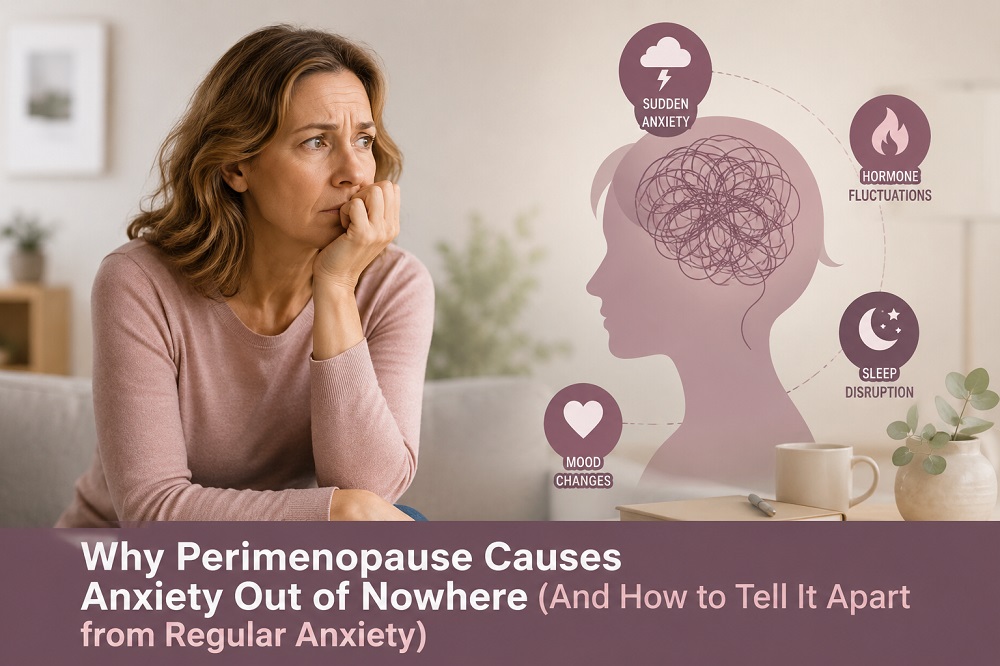
Perimenopause anxiety happens because fluctuating estrogen and progesterone directly affect brain chemicals that regulate calm and mood, including serotonin and GABA. Unlike everyday stress, it can appear suddenly, without an obvious trigger, and often comes with physical symptoms like a racing heart or disrupted sleep. Lifestyle changes, therapy, and sometimes medical treatment can meaningfully ease it.
What Is Perimenopause Anxiety?
Perimenopause anxiety refers to new or intensified feelings of worry, unease, or dread that emerge during the hormonal transition leading up to menopause. It can appear in women with no prior history of anxiety, which is part of what makes it feel so disorienting. Research suggests the perimenopause window — particularly the later stage, as periods become more irregular — carries a notably higher risk of new-onset anxiety and depressive symptoms compared to the years before or after it.
Why Perimenopause Can Cause Anxiety
Several overlapping biological shifts contribute to anxiety during this stage:
- Estrogen influences serotonin: estrogen helps regulate serotonin production and receptor sensitivity, so its fluctuation can directly affect mood stability.
- Progesterone has a calming effect: progesterone converts into allopregnanolone, which supports GABA, the brain’s primary calming neurotransmitter; as progesterone drops, that calming effect weakens.
- The HPA axis becomes more reactive: the stress-response system (hypothalamic-pituitary-adrenal axis) can become more sensitive during hormonal fluctuation, amplifying the body’s stress reaction to everyday triggers.
- Sleep disruption compounds anxiety: night sweats and fragmented sleep reduce the brain’s capacity to regulate emotion the next day, creating a cycle that feeds anxiety.
Common Signs and Symptoms
Perimenopause-related anxiety often shows up as a mix of emotional and physical signs: persistent or sudden worry that feels disproportionate to the situation, a racing or pounding heart, tightness in the chest, restlessness, irritability, and difficulty concentrating. Many women also describe a new sense of dread upon waking, or anxiety that intensifies in the days before a period as hormone levels shift most sharply.
How Hormonal Changes Affect Mood and Anxiety
Estrogen and progesterone do more than regulate reproduction — both interact directly with brain chemistry. Estrogen supports serotonin production and helps keep the prefrontal cortex, the brain’s planning and emotion-regulation center, functioning smoothly. Progesterone’s byproduct, allopregnanolone, acts on GABA receptors, the same receptors targeted by anti-anxiety medications, producing a natural calming effect. As both hormones fluctuate unpredictably rather than declining steadily, the brain experiences a kind of chemical turbulence, which can translate into anxiety that feels disconnected from any specific life event.
Anxiety vs Normal Stress During Perimenopause
Ordinary stress usually has a clear cause — a deadline, an argument, a health scare — and eases once the situation resolves. Perimenopause-related anxiety, by contrast, often appears without an identifiable trigger, can fluctuate with the menstrual cycle or time of day, and frequently comes bundled with physical symptoms like hot flashes, palpitations, or sleep disruption. If worry persists most days for two weeks or longer, feels out of proportion to daily events, or interferes with work or relationships, it’s worth discussing with a healthcare provider rather than assuming it will simply pass.
Symptom and Trigger Comparison Table
| Symptom | Common Hormonal Trigger | Also Worth Checking |
| Sudden waves of worry or dread | Estrogen and progesterone fluctuation affecting serotonin and GABA activity | Thyroid function, caffeine intake |
| Racing heart or palpitations | Vasomotor symptoms (hot flashes) overlapping with adrenaline release | Blood pressure, arrhythmia screening |
| Waking at 3–4 a.m. with anxious thoughts | Overnight estrogen dips disrupting sleep architecture | Sleep apnea, evening alcohol use |
| Irritability or feeling “on edge” | Lower progesterone reducing its calming effect on the nervous system | Chronic stress load, unresolved life stressors |
| Difficulty concentrating with worry | Estrogen’s role in prefrontal cortex function declining | Sleep debt, iron or B12 levels |
Practical Ways to Manage Perimenopause Anxiety
- Slow, extended-exhale breathing activates the parasympathetic nervous system and can reduce acute anxiety within minutes.
- Regular movement or exercise helps regulate cortisol and has research support for easing both anxiety and hot flashes.
- Consistent sleep and wake times reduces the compounding effect of sleep loss on next-day mood regulation.
- Limiting caffeine and alcohol both can amplify physical anxiety symptoms like a racing heart or disrupted sleep.
- Cognitive behavioral therapy (CBT) has strong evidence for reducing anxiety symptoms during the menopause transition specifically.
Lifestyle Changes That May Help
Beyond acute coping tools, consistent daily habits build longer-term resilience. Regular movement, ideally most days of the week, supports both mood regulation and cardiovascular health during this transition. Stress-reduction practices like mindfulness meditation have research support for reducing anxiety severity in midlife women specifically. Maintaining social connection and open conversations about symptoms also reduces the isolation that can amplify anxiety.
Foods, Sleep, and Exercise Considerations
Diet, sleep, and movement each play a supporting role. Reducing caffeine, particularly in the afternoon, can lessen physical anxiety symptoms like a racing heart. Alcohol may feel calming short-term but disrupts sleep and can worsen next-day anxiety. Omega-3-rich foods, such as fatty fish and walnuts, are associated in some studies with more stable mood during hormonal transitions. Prioritizing consistent, sufficient sleep is one of the most impactful levers available, since sleep loss and anxiety reinforce each other in perimenopause more than at other life stages. Moderate aerobic exercise and strength training both have evidence supporting reduced anxiety symptoms and improved sleep quality.
When to Talk to a Healthcare Professional
It’s time to seek professional support if anxiety persists most days for two or more weeks, disrupts sleep, work, or relationships, comes with panic-attack-like symptoms, or occurs alongside thoughts of hopelessness. A doctor can evaluate whether hormone therapy, non-hormonal medication, or therapy such as CBT is appropriate, and can also rule out other contributors like thyroid dysfunction, which can mimic anxiety symptoms during this life stage.
Frequently Asked Questions
Can perimenopause really cause anxiety with no clear trigger?
Yes. Fluctuating estrogen and progesterone directly affect brain chemicals involved in mood regulation, which can produce anxiety that feels disconnected from any specific stressor.
Does perimenopause anxiety go away after menopause?
For many women, anxiety levels ease once hormone levels stabilize after menopause, though this varies and some benefit from continued lifestyle or medical support.
Is perimenopause anxiety the same as generalized anxiety disorder?
Not necessarily. It can resemble it, but perimenopause anxiety is tied specifically to hormonal fluctuation and often improves with hormone-focused treatment, while generalized anxiety disorder has broader underlying causes.
What helps perimenopause anxiety fast?
Slow, extended-exhale breathing and brief movement, like a short walk, are among the fastest evidence-supported ways to ease an acute anxious moment.
Key Takeaways
Perimenopause anxiety is a real, biologically driven experience rooted in fluctuating estrogen and progesterone, not a personal or emotional failing. It often looks and feels different from everyday stress, appearing suddenly and alongside physical symptoms. Lifestyle changes, therapy, and medical treatment when needed can meaningfully reduce its impact, and persistent or severe symptoms are always worth discussing with a healthcare provider.
Leave a Reply