

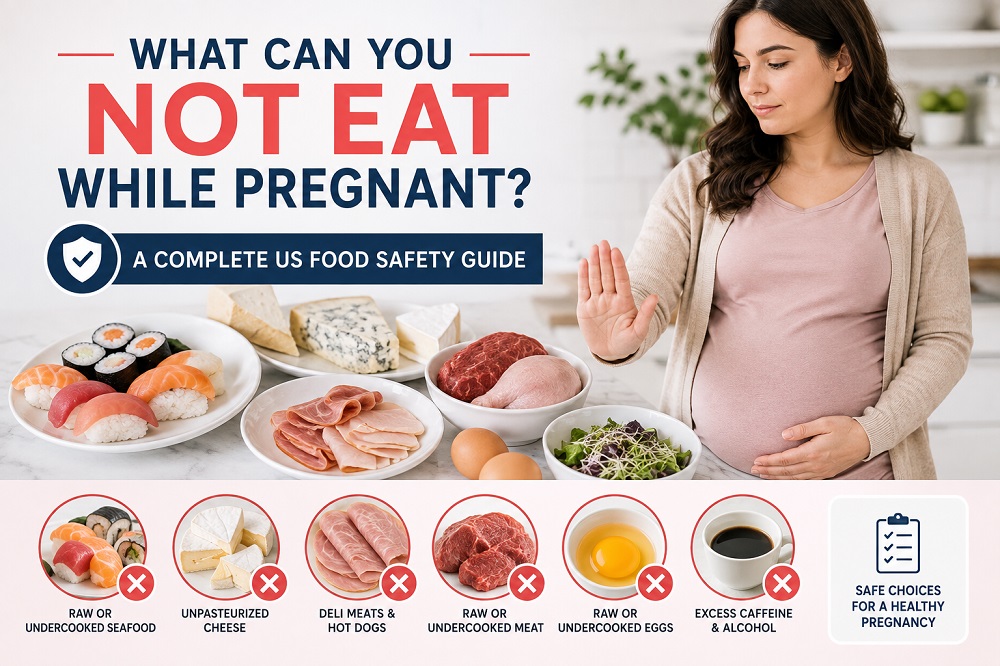
Pregnancy changes more than your body — it changes what belongs on your plate. In the United States, obstetric providers and food-safety agencies such as the FDA and USDA flag a specific list of foods and drinks that carry a higher risk of bacteria, parasites, or heavy metals like mercury. None of these warnings exist to scare you away from eating well; they exist because a developing baby’s immune system and nervous system are far more vulnerable than an adult’s. Knowing exactly what to skip — and what to swap it for — makes it much easier to eat with confidence through all three trimesters. This guide walks through every major category of food and drink pregnant women in the US are advised to avoid, along with safer alternatives for each one.
Why Does Diet Matter So Much During Pregnancy?
During pregnancy, hormonal shifts slightly suppress the immune system, which makes it easier for foodborne bacteria such as Listeria, Salmonella, and E. coli to take hold. An infection that would give a non-pregnant adult a rough day can, in a pregnant woman, cross the placenta and lead to miscarriage, stillbirth, or serious illness in a newborn. Certain chemicals, particularly mercury, also pass directly to the fetus and can affect brain and nervous system development. That is why the ‘foods to avoid’ list during pregnancy is longer and more specific than everyday healthy-eating advice.
Which Seafood Should You Avoid When Pregnant?
Fish is a valuable source of protein and omega-3 fats, but large, long-living predatory fish accumulate mercury in their tissue over time. As a general rule, the bigger and older the fish, the more mercury it is likely to carry. The FDA advises pregnant women to skip the highest-mercury species entirely and to keep total seafood intake to about 8 to 12 ounces — roughly 2 to 3 servings — per week from low-mercury choices.
| Fish to Avoid (High Mercury) | Safer Low-Mercury Choices |
| Bigeye tuna | Salmon |
| King mackerel | Shrimp |
| Marlin | Catfish |
| Orange roughy | Tilapia |
| Swordfish | Cod |
| Shark | Light canned tuna |
| Tilefish | Sardines and anchovies |
Is It Safe to Eat Raw or Undercooked Seafood?
No. Raw or undercooked seafood — including sushi, sashimi, ceviche, and raw oysters, clams, or scallops — can carry parasites and bacteria that cooking would normally destroy. Refrigerated smoked seafood, such as lox, nova-style salmon, or jerky-style fish, should also be skipped unless it is baked into a hot dish, since it can harbor Listeria. Canned or shelf-stable smoked seafood is considered safe. When you do cook seafood, fish should reach an internal temperature of 145°F and look opaque and flaky; shrimp, lobster, and scallops should turn milky white; and clams, mussels, and oysters should be cooked until their shells open, with any that stay shut discarded.
What About Undercooked Meat, Poultry, and Eggs?
- Cook all meat and poultry fully, and check doneness with a meat thermometer rather than by color alone.
- Heat hot dogs and deli meats until steaming hot, or avoid them altogether, since they are a known source of Listeria.
- Skip refrigerated pâté and meat spreads — canned or shelf-stable versions are fine.
- Cook eggs until both the yolk and white are completely firm, and avoid foods made with raw eggs, such as homemade eggnog, raw cookie dough, tiramisu, and homemade Caesar dressing or hollandaise sauce.
- Avoid pre-made deli salads like chicken, tuna, or ham salad, since preparation and storage practices can raise contamination risk.
Why Should You Avoid Unpasteurized Dairy and Juice?
Pasteurization heats milk and juice enough to kill harmful bacteria, so anything unpasteurized is considered off-limits during pregnancy. That includes raw milk and soft cheeses such as brie, feta, camembert, and blue cheese, unless the label specifically states they are made with pasteurized milk. Unpasteurized apple cider and fresh-pressed juices sold at farm stands can also carry E. coli, so it’s worth checking labels or asking before you drink them.
Do You Need to Wash Fruits and Vegetables More Carefully?
Yes. Rinse all raw produce thoroughly under running water, even items you plan to peel, since surface bacteria can transfer to a knife or your hands during preparation. Raw sprouts, including alfalfa, clover, radish, and mung bean, deserve extra caution: the warm, humid conditions they’re grown in make them prone to bacterial contamination that rinsing alone can’t fully remove, so they should be cooked thoroughly rather than eaten raw.
How Much Caffeine Is Safe During Pregnancy?
Caffeine crosses the placenta, and because a developing fetus can’t metabolize it as efficiently as an adult, most US obstetric guidance suggests staying under about 200 milligrams a day — roughly the amount found in one 12-ounce cup of coffee.
| Beverage (8 oz unless noted) | Approximate Caffeine |
| Brewed coffee | 95 mg |
| Brewed tea | 47 mg |
| Cola (12 oz) | 33 mg |
| Energy drink (8 oz) | 70–100 mg (varies by brand) |
| Decaf coffee | 2–5 mg |
Why Is Herbal Tea Not Recommended?
Herbal teas aren’t regulated the same way medications are, and research into how specific herbs affect a developing fetus is still limited. Even blends marketed specifically for pregnancy haven’t all been thoroughly studied for safety, so it’s best to get your provider’s sign-off before adding any herbal tea to your routine.
Is Any Amount of Alcohol Safe During Pregnancy?
No amount of alcohol has been shown to be safe at any point in pregnancy. Drinking raises the risk of miscarriage and stillbirth, and it is a leading cause of fetal alcohol syndrome, which can affect facial development and lifelong cognitive function. If you drank before realizing you were pregnant, talk with your health care provider rather than worrying in silence — and if cutting back feels difficult, ask for support as early as possible.
What Foods Are Safe to Eat While Pregnant?
The far longer list is what you can eat: fully cooked lean meats and poultry, low-mercury fish, pasteurized dairy, thoroughly washed produce, whole grains, legumes, and pasteurized juices. Most of pregnancy nutrition comes down to smart substitutions rather than restriction — canned tuna instead of raw, pasteurized feta instead of the deli case’s soft cheese, and a coffee habit trimmed to about one cup a day.
Frequently Asked Questions
Can I eat sushi at all while pregnant?
Cooked sushi rolls, such as a California roll made with cooked crab, are generally fine. Raw preparations like sashimi or nigiri are best left until after delivery.
Is it okay to eat deli turkey if I heat it first?
Yes. Heating deli meat until it is steaming hot kills the bacteria that make it risky to eat cold.
Can I still drink coffee every morning?
Most providers consider one 8 to 12 ounce cup a day, kept under about 200 mg of caffeine, acceptable.
What if I ate something on this list before I knew I was pregnant?
A single exposure rarely causes harm. Mention it at your next prenatal visit so your provider can advise you based on your specific situation.
Are all soft cheeses off-limits?
Only unpasteurized ones. Soft cheeses labeled as made with pasteurized milk are generally considered safe.
Why is alcohol treated as an absolute no, while caffeine just has a limit?
Researchers haven’t identified any amount of alcohol proven safe at any stage of pregnancy, which is why guidance recommends avoiding it completely rather than setting a threshold.
