

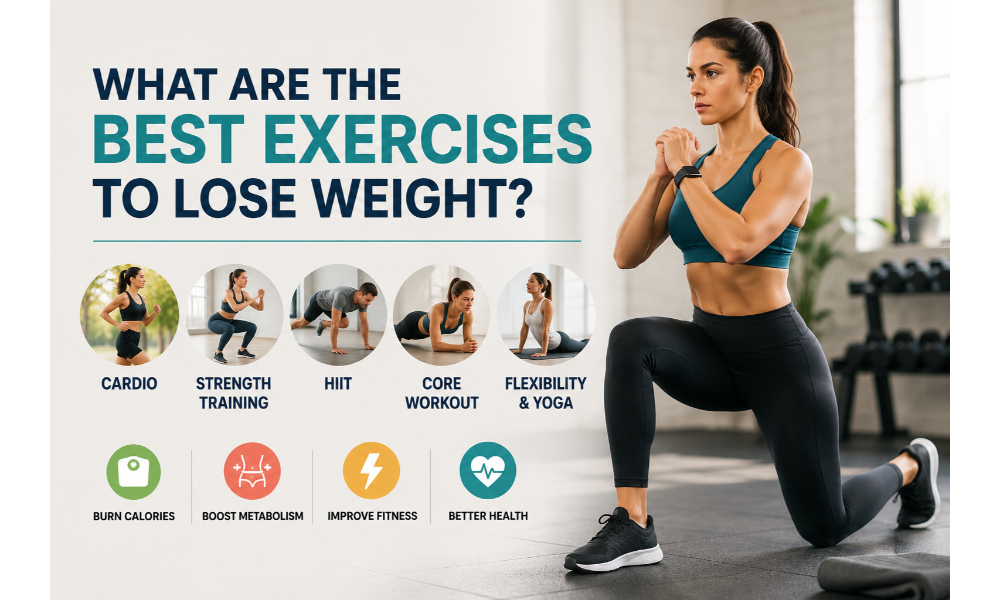
When it comes to losing weight, exercise is one of the most effective tools available — but with so many workout options, it’s easy to wonder which ones actually deliver the best results. The truth is, the most effective approach usually combines several types of movement rather than relying on just one. Here’s a complete breakdown of the best exercises for weight loss and how to put them together into a routine that works.
Key Takeaways
- Combining cardio and strength training is more effective for weight loss than either alone.
- High-intensity activities burn more calories per minute, but any consistent movement helps.
- Walking, running, cycling, swimming, and HIIT are among the most effective calorie-burning exercises.
- Strength training helps preserve muscle mass and supports metabolism during weight loss.
- Consistency and enjoyment matter more for long-term success than finding a single “perfect” workout.
What Makes an Exercise Effective for Weight Loss?
Weight loss ultimately comes down to burning more calories than you consume over time. The most effective exercises for weight loss are the ones that burn a meaningful number of calories, that you can do consistently, and that you can gradually build up in intensity or duration as your fitness improves. That’s why a mix of cardio and strength training tends to outperform any single type of exercise done in isolation.
What Are the Best Cardio Exercises for Weight Loss?
Cardiovascular exercise raises your heart rate and burns calories efficiently during the activity itself. Some of the most effective options include running, cycling, swimming, brisk walking, rowing, and jump rope. The table below shows roughly how many calories a 155-pound person might burn during 30 minutes of each activity.
| Exercise (30 minutes) | Approx. Calories Burned* |
|---|---|
| Brisk Walking | ~150 |
| Running (6 mph) | ~300 |
| Cycling (moderate) | ~260 |
| Swimming (laps) | ~250 |
| Jump Rope | ~300 |
| High-Intensity Interval Training | ~350 |
| Strength Training | ~180 |
*Estimates vary based on body weight, intensity, and individual fitness level.
How Does Strength Training Help With Weight Loss?
While strength training typically burns fewer calories during the workout itself compared to cardio, it plays a crucial role in weight loss by building and preserving lean muscle mass. Muscle tissue burns more calories at rest than fat tissue does, which means strength training can help support your metabolism even after the workout ends — something cardio alone doesn’t do as effectively.
What Is HIIT and Why Is It Effective for Fat Loss?
High-intensity interval training, or HIIT, alternates short bursts of intense effort with brief recovery periods. This style of training tends to burn a high number of calories in a shorter amount of time and can continue to boost calorie burn for hours after the workout ends, an effect sometimes called excess post-exercise oxygen consumption. HIIT is also time-efficient, making it appealing for people with busy schedules.
How Many Days a Week Should You Exercise to Lose Weight?
Most guidelines recommend at least 150 to 300 minutes of moderate-intensity cardio per week, combined with strength training on two or more non-consecutive days. Spreading activity across the week, rather than cramming it into one or two long sessions, tends to be easier to sustain and reduces the risk of injury or burnout.
What Other Factors Matter Besides Exercise for Weight Loss?
- Diet quality and portion control, which play a major role in overall calorie balance
- Sleep, since poor sleep is linked to increased hunger and weight gain
- Stress management, as chronic stress can affect eating habits and hormone balance
- Staying hydrated, which supports metabolism and can help manage hunger cues
- Non-exercise activity, like walking more throughout the day or taking the stairs
How Can You Build a Sustainable Weight Loss Workout Routine?
- Start with an activity level that matches your current fitness, even if that means short walks at first
- Mix in both cardio and strength training across the week rather than focusing on just one
- Schedule workouts like appointments to build consistency
- Track your progress, whether through workouts completed, strength gained, or how you feel
- Build in rest days to allow your body to recover and avoid burnout
Frequently Asked Questions
What is the single best exercise for weight loss? There isn’t one single best option — a combination of cardio and strength training, done consistently, tends to produce the best overall results.
Can you lose weight through exercise alone? Exercise helps, but diet typically has a bigger impact on weight loss, since it’s easier to consume excess calories than to burn them off through exercise.
How long before you see results from exercise? Many people notice changes in energy and strength within a few weeks, while visible weight changes often take four to eight weeks of consistent effort.
Is walking enough to lose weight? Walking can be an effective weight loss tool, especially when combined with a healthy diet, and it’s a great starting point for beginners.
Should beginners do cardio or strength training first? Either can work well for beginners — what matters most is choosing something you can stick with consistently over time.
The best exercise for weight loss is ultimately the one you can do consistently and safely over time. By combining cardio, strength training, and healthy daily habits, you can build a well-rounded routine that supports lasting weight loss rather than a short-term fix.
