

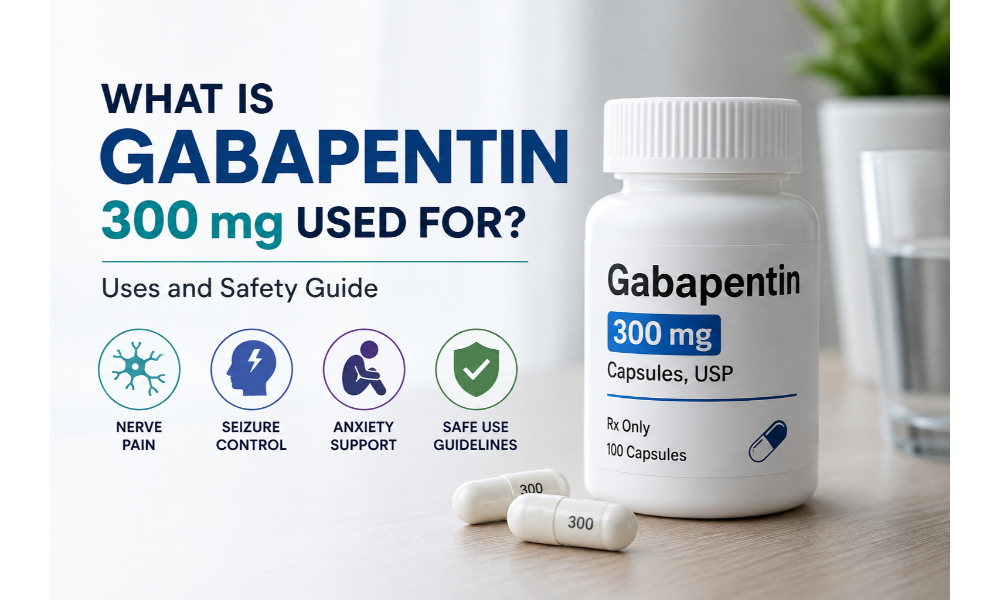
Gabapentin is one of the most frequently prescribed medications in the United States for nerve-related pain and certain seizure disorders. The 300 mg strength is one of several common dosage options, often used as a starting dose or as part of a larger daily regimen your doctor determines. Here’s a closer look at what gabapentin is used for, how it works, and what to know before taking it. This article is for general education and doesn’t replace advice from your prescribing doctor.
| Drug Class | Anticonvulsant / nerve pain medication |
|---|---|
| Common Uses | Nerve pain, seizures, restless legs syndrome |
| Available Forms | Capsules, tablets, oral solution |
| Typical Onset | Varies by condition — often days to weeks for full effect |
What Is Gabapentin?
Gabapentin is a prescription medication originally developed as an anticonvulsant, meaning it was first used to help control seizures. Over time, doctors discovered it was also effective for certain types of nerve pain, and its use has since expanded to a range of both approved and off-label purposes.
What Is Gabapentin 300 mg Used For?
The 300 mg strength is commonly used to treat nerve pain that follows a shingles outbreak (called postherpetic neuralgia), as an add-on treatment for certain seizure types, and — in an extended-release form — for restless legs syndrome. Doctors also prescribe gabapentin off-label for other nerve pain conditions, such as diabetic neuropathy, based on clinical experience even though it isn’t officially FDA-approved for those uses.
| Use | FDA Status |
|---|---|
| Postherpetic neuralgia (nerve pain after shingles) | FDA-approved |
| Partial-onset seizures (adjunct therapy) | FDA-approved |
| Restless legs syndrome (extended-release form) | FDA-approved |
| Diabetic nerve pain | Off-label |
| Anxiety | Off-label |
| Fibromyalgia | Off-label |
How Does Gabapentin Work?
Gabapentin is thought to work by calming overactive nerve signals in the brain and spinal cord. While it was originally designed to mimic a natural brain chemical called GABA, researchers now believe it primarily works by binding to calcium channels involved in transmitting pain and seizure signals, which helps reduce abnormal nerve activity.
How Is Gabapentin 300 mg Typically Dosed?
Dosing is highly individualized and depends on the condition being treated, how you respond to the medication, and factors like kidney function. Doctors often start with a lower dose and increase it gradually to help minimize side effects like drowsiness. Because dosing schedules vary so much from person to person, it’s essential to follow your prescription exactly and never adjust your dose without consulting your doctor.
What Are the Common Side Effects of Gabapentin?
- Drowsiness or fatigue
- Dizziness
- Coordination problems
- Swelling in the hands or feet
- Blurred vision
What Are the Serious Side Effects or Warnings to Know?
- Mood changes, including new or worsening depression or suicidal thoughts
- Signs of a severe allergic reaction, such as rash, swelling, or difficulty breathing
- Increased risk of misuse or dependence, particularly in people with a history of substance use
- Withdrawal symptoms, including a risk of seizures, if the medication is stopped abruptly
Who Should Use Caution With Gabapentin?
- People with a history of substance use disorder
- Those with kidney disease, who may require a dose adjustment
- Older adults, who may face a higher risk of drowsiness and falls
- Pregnant or breastfeeding individuals, who should discuss risks and benefits with a doctor
What Should You Know Before Taking Gabapentin?
- Never stop taking gabapentin suddenly without medical guidance
- Avoid or limit alcohol, which can intensify drowsiness and dizziness
- Use caution with driving or operating machinery until you know how it affects you
- Take doses at the times your doctor specifies for the best effect
- Store it securely, given its potential for misuse
Frequently Asked Questions
Is gabapentin a controlled substance? In several U.S. states, gabapentin is classified as a controlled substance due to its potential for misuse, even though it isn’t controlled at the federal level.
Can gabapentin be used for anxiety? It’s sometimes prescribed off-label for anxiety, though it isn’t FDA-approved for that purpose, and its effectiveness varies from person to person.
How long does it take gabapentin to work for nerve pain? Some people notice improvement within days, but it can take several weeks at an effective dose to feel the full benefit.
Can you suddenly stop taking gabapentin? No. Stopping abruptly can cause withdrawal symptoms and, in some cases, seizures, so any changes to your dose should be guided by your doctor.
Is gabapentin addictive? It carries some risk of misuse and dependence, particularly for people with a history of substance use disorder, which is why it’s monitored closely by prescribers.
Gabapentin 300 mg is one part of a broader treatment approach for nerve pain, seizures, and related conditions, with the right dose and use depending entirely on your individual situation. Because dosing and safety considerations vary so much from person to person, ongoing communication with your prescribing doctor is the best way to use this medication safely.
