

What It Is
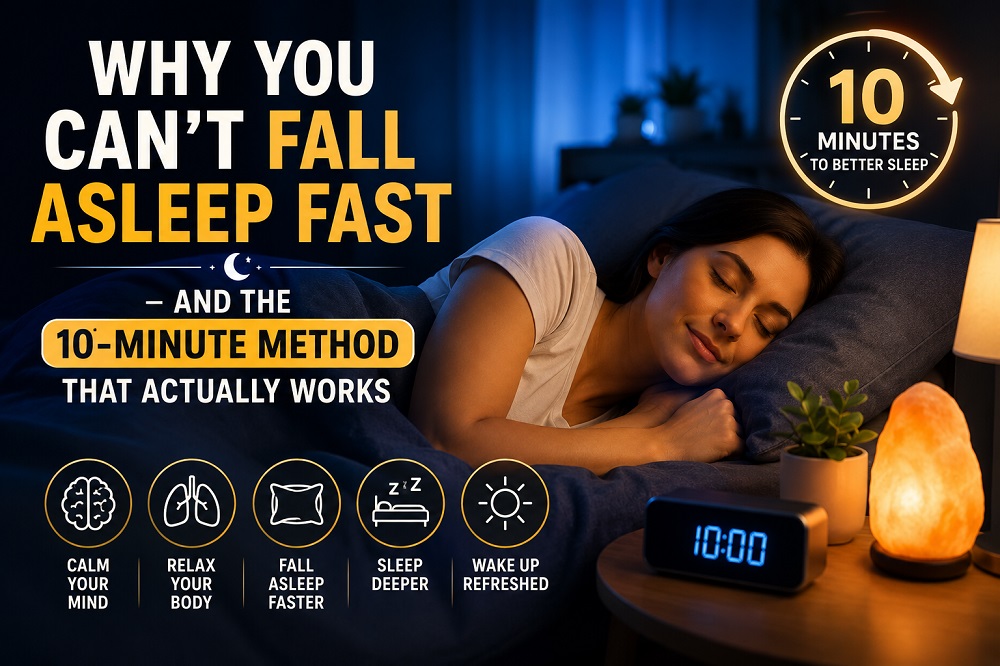
Sleep latency is the technical term for how long it takes to fall asleep after lying down. Sleep researchers consider 10 to 20 minutes a healthy range. Falling asleep in under 5 minutes on a regular basis can actually signal sleep deprivation rather than “good” sleep, while taking longer than 30 minutes on most nights is a marker of insomnia. The goal of fast-but-healthy sleep onset is landing in that 10 to 20 minute window consistently, not chasing instant unconsciousness.
Why It Happens
Difficulty falling asleep is usually driven by a mismatch between the body’s internal clock and its immediate environment or mental state. Four mechanisms are most commonly involved:
- Circadian misalignment: light exposure, meal timing, or irregular sleep schedules shift the body’s natural melatonin release later than it should occur.
- Cognitive arousal: racing or anxious thoughts keep the brain in an alert state, driven by cortisol and adrenaline.
- Physiological arousal: an elevated core body temperature or muscle tension delays the natural drop in alertness that precedes sleep.
- Conditioned alertness: the bed becomes associated with wakefulness — scrolling, working, or lying awake frustrated — which trains the brain to expect stimulation rather than rest.
Evidence-Based Lifestyle Changes
Light Exposure
Bright light, especially blue-toned light from screens, suppresses melatonin production. Research on light exposure supports dimming lights and reducing screen brightness for at least 30 to 60 minutes before bed, and getting bright natural light in the morning to anchor the circadian rhythm.
Temperature Regulation
Core body temperature naturally drops before sleep, and a cool room supports that process. Studies on sleep environment generally point to a bedroom temperature of about 60 to 67°F as most conducive to faster sleep onset.
Consistent Sleep-Wake Times
Keeping a fixed wake-up time, including on weekends, is one of the most well-supported ways to stabilize circadian rhythm and reduce the night-to-night variability in how long it takes to fall asleep.
Breathing and Relaxation Techniques
Slow, extended exhale breathing patterns, such as the 4-7-8 method (inhale for 4 seconds, hold for 7, exhale for 8), activate the parasympathetic nervous system, which lowers heart rate and can shorten the time it takes to feel drowsy.
Daytime Exercise
Regular moderate exercise, particularly earlier in the day, is associated with shorter sleep onset time in multiple studies, though vigorous exercise within an hour or two of bedtime can have the opposite effect for some people.
Foods That May Help
Some foods contain compounds that support the body’s natural sleep signaling:
- Tart cherries contain natural melatonin and have shown modest improvements in sleep duration in small studies.
- Kiwifruit has been linked to improved sleep onset and quality in limited trials, possibly due to its serotonin content.
- Tryptophan-rich foods such as turkey, eggs, and dairy, provide a building block for serotonin and melatonin production.
- Complex carbohydrates like oats in moderate amounts may support tryptophan uptake into the brain.
Foods to Avoid
A few common foods and drinks work against sleep onset when consumed too close to bedtime:
- Caffeine has a half-life of roughly 5 to 6 hours, so a mid-afternoon coffee can still affect sleep onset at bedtime.
- Alcohol may cause drowsiness initially but disrupts REM sleep and increases nighttime awakenings.
- Heavy, high-fat, or spicy meals close to bedtime can cause discomfort or reflux that delays sleep onset.
- High-sugar snacks in the evening may cause blood sugar fluctuations that interfere with staying asleep.
Supplements Commonly Discussed
Melatonin is the most studied over-the-counter option and appears most useful for shifting circadian timing, such as with jet lag, rather than as a nightly sedative; low doses (0.5 to 3 mg) are generally considered sufficient in current research. Magnesium is commonly discussed for its role in muscle relaxation and nervous system regulation, though evidence for meaningfully faster sleep onset is still limited. L-theanine, an amino acid found in tea, has some evidence supporting reduced mental arousal without sedation. As with any supplement, it is worth discussing use and appropriate dosing with a healthcare provider, particularly for those on other medications.
Daily Routine Recommendations
A supportive daily structure matters as much as nighttime habits. Getting natural light exposure within the first hour of waking helps anchor the circadian rhythm. Keeping caffeine intake to the morning and early afternoon avoids lingering stimulant effects. Scheduling exercise earlier in the day supports both mood and sleep pressure. A consistent wind-down routine of 30 to 60 minutes — dim lighting, a warm shower, light reading, or stretching — signals to the body that sleep is approaching. Keeping the same wake time daily, even after a poor night’s sleep, helps stabilize the whole system faster than adjusting bedtime alone.
Common Mistakes
A few recurring habits quietly work against faster sleep onset:
- Phone scrolling in bed reinforces the bed as a place of alertness rather than rest.
- Clock-checking during wakeful periods increases anxiety and cognitive arousal.
- Using alcohol as a sleep aid tends to backfire by fragmenting sleep later in the night.
- Long or late naps reduce the natural sleep pressure needed to fall asleep quickly at night.
- Trying too hard to fall asleep — sometimes called “sleep effort” — paradoxically increases arousal.
If sleep does not come within about 20 minutes, most sleep specialists recommend getting up, doing a calm activity in dim light, and returning to bed only when sleepy.
Frequently Asked Questions
What is the fastest scientifically supported way to fall asleep?
Combining a cool, dark room with a slow-breathing technique like 4-7-8 breathing has some of the best current support for shortening sleep onset time, though individual results vary.
Is it bad to fall asleep instantly?
Falling asleep in under 5 minutes on a regular basis can indicate significant sleep deprivation rather than optimal sleep health; a range of 10 to 20 minutes is generally considered healthy.
Does melatonin help you fall asleep faster?
Melatonin is more effective at shifting the timing of sleep, such as for jet lag or shift work, than as a nightly tool to fall asleep faster, according to current research.
How long should it take to fall asleep?
Sleep researchers generally consider 10 to 20 minutes a healthy sleep onset window; consistently taking longer than 30 minutes may indicate insomnia worth discussing with a doctor.
Final Checklist for Falling Asleep Faster Tonight
- Dim lights and screens 60 minutes before bed
- Keep the bedroom between 60–67°F (15–19°C)
- Stop caffeine at least 8 hours before bedtime
- Try the 4-7-8 breathing method for 3 rounds
- Get out of bed if not asleep within 20 minutes
- Avoid checking the clock repeatedly
- Keep a consistent wake-up time, even on weekends
- Reserve the bed for sleep only, not scrolling or work
Final Takeaways
Falling asleep quickly is less about a single trick and more about consistently lowering physical and mental arousal at the same time each night. Light, temperature, timing, and a calm wind-down routine have the strongest current research support, while food and supplement choices play a smaller, supporting role. Anyone experiencing sleep onset difficulty most nights for several weeks, especially alongside daytime fatigue, should speak with a healthcare provider to rule out an underlying sleep disorder.
