

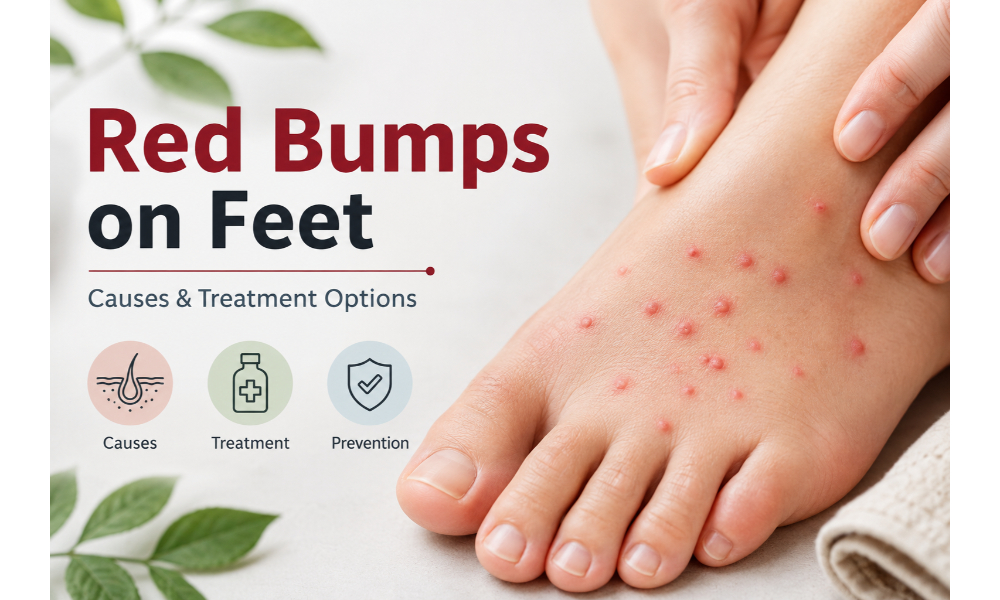
Discovering small, red, pimple-like bumps on your feet can be unsettling, especially when you’re not sure whether it’s a passing irritation or something that needs medical care. In most cases, the cause turns out to be one of a handful of common, treatable skin conditions. This guide breaks down the most frequent causes — including a lesser-known one called dyshidrosis — along with how to tell them apart and when to see a doctor.
Key Takeaways
- Red, pimple-like bumps on the feet usually stem from irritation, clogged follicles, allergic reactions, or mild infections.
- Dyshidrosis, a type of eczema, causes small, deep, intensely itchy blisters, often on the soles and toes.
- Most causes clear up with basic hygiene changes and over-the-counter treatment.
- Rapid spreading, blistering, or fever are signs to see a doctor promptly.
- Breathable footwear and dry feet help prevent many types of foot bumps from recurring.
What Causes Red Pimple-Like Bumps on Feet?
A range of factors can trigger red bumps on the feet, including blocked hair follicles, allergic reactions, fungal or bacterial infections, insect bites, and certain types of eczema. Because feet spend much of the day enclosed in socks and shoes, they’re prone to friction, sweat, and irritation — all common contributors to bumps forming. Identifying the likely cause usually comes down to where the bumps appear, what they feel like, and any other symptoms present.
What Do the Most Common Causes Look Like?
The table below summarizes some of the most frequent causes of red, pimple-like bumps on the feet, including typical symptoms and standard treatment approaches.
| Possible Cause | Typical Symptoms | Common Treatment |
| Keratosis Pilaris | Small rough bumps, usually painless | Moisturizers, gentle exfoliation |
| Folliculitis | Red bumps around hair follicles, may itch | Warm compress, antibacterial wash |
| Contact Dermatitis | Itchy red bumps after contact with an irritant | Avoid irritant, topical steroid cream |
| Athlete’s Foot | Bumps with peeling or itching, often between toes | Antifungal cream |
| Dyshidrosis (Dyshidrotic Eczema) | Small, deep, intensely itchy blisters on soles or toes | Moisturizers, steroid creams, cool compresses |
| Insect Bites or Hives | Raised, itchy welts that may cluster or shift location | Antihistamines, cold compress |
Could It Be Keratosis Pilaris?
Keratosis pilaris is a common, harmless condition caused by a buildup of keratin blocking hair follicles. While it more often appears on the arms and thighs, it can occasionally show up on the feet as small, rough, reddish or skin-toned bumps. It’s typically painless and not itchy, and regular moisturizing along with gentle exfoliation tends to help.
Could It Be Folliculitis?
Folliculitis develops when hair follicles become inflamed or infected, often due to bacteria, friction, or shaving. It typically appears as small red or white-topped bumps clustered around follicles, sometimes tender or itchy. Mild cases often improve with warm compresses and good hygiene, while more persistent cases may need an antibacterial treatment.
Could It Be Dyshidrosis (Dyshidrotic Eczema)?
Dyshidrosis, also called dyshidrotic eczema, is a specific skin condition that causes small, deep-set blisters — often described as looking like tiny pimples or tapioca pearls — usually along the edges of the soles, toes, or between them. Unlike some other causes, it tends to be intensely itchy and can cause the skin to become dry, cracked, or scaly as the blisters resolve. The exact cause isn’t fully understood, but it’s often linked to allergies, stress, sweaty feet, or exposure to certain metals. Treatment typically includes moisturizers, cool compresses, and topical steroid creams, and a dermatologist can help identify triggers for recurring flare-ups.
Could It Be an Allergic Reaction or Contact Dermatitis?
Contact dermatitis occurs when skin reacts to an irritant or allergen, such as certain shoe materials, detergents, or lotions. This often leads to itchy, red, bumpy patches that appear shortly after exposure. Identifying and avoiding the trigger is key, and a mild topical steroid cream can help calm the reaction while skin heals.
Could It Be Athlete’s Foot or Another Fungal Infection?
Athlete’s foot is a common fungal infection that thrives in warm, moist environments like sweaty shoes and socks. Along with red bumps, it often causes peeling, cracking, or itching, particularly between the toes. Over-the-counter antifungal creams are usually effective, though a spreading or persistent infection may need a prescription-strength treatment.
Could It Be Insect Bites or Hives?
Insect bites typically appear as small, raised, itchy welts, often clustered or lined up, especially after time spent outdoors. Hives are different — raised welts that can appear suddenly, shift shape, and spread across the body in response to an allergen, medication, or other trigger. Both are usually managed with antihistamines and identifying the underlying cause.
When Should You See a Doctor About Bumps on Your Feet?
- The bumps spread rapidly or worsen despite home treatment
- You notice blistering, oozing, or an unusual odor
- You develop a fever or feel generally unwell
- The area becomes increasingly painful, swollen, or warm
- Symptoms don’t improve after one to two weeks of home care
- You have diabetes or a weakened immune system, which raises the risk of complications
How Can You Treat and Prevent Red Bumps on Your Feet at Home?
- Keep feet clean and thoroughly dry, especially between the toes
- Wear breathable socks and shoes, and let footwear fully dry out between uses
- Moisturize regularly to prevent dry, irritated, or cracked skin
- Avoid scratching or picking at bumps to reduce infection risk
- Change socks daily, or more often if your feet sweat heavily
- Use an antifungal powder or spray if you’re prone to fungal issues
Frequently Asked Questions
Are red bumps on feet always contagious?
No. Many causes, including keratosis pilaris, dyshidrosis, and allergic reactions, are not contagious. Fungal infections like athlete’s foot, however, can spread to others.
Can shoes cause red bumps on feet?
Yes. Tight or poorly ventilated shoes can cause friction, excess sweating, and allergic reactions to certain materials, all of which can lead to bumps.
What triggers dyshidrosis flare-ups?
Common triggers include stress, seasonal allergies, sweaty or damp feet, and contact with certain metals, though the exact cause can vary from person to person.
Can diabetes cause bumps on the feet?
Diabetes doesn’t directly cause bumps, but it raises the risk of infection and slows healing, so any new foot skin changes should be checked by a doctor promptly.
When are red bumps on the feet an emergency?
Seek urgent care for rapid spreading, red streaking, fever, severe pain, or signs of a serious allergic reaction like difficulty breathing.
Most red, pimple-like bumps on the feet are caused by common, treatable skin conditions — from mild irritation to dyshidrosis or a fungal infection. Paying attention to how the bumps look, where they appear, and whether other symptoms develop can help you decide on the right home care, and when it’s time to get a professional opinion.
